


Buying advice: Why an MTB hardtail can be the better alternative to a gravel bike
Florentin Vesenbeckh
· 06.04.2026

Gravel bikes are fast, efficient and extremely versatile on many routes. Nevertheless, there is a clear usage profile in which an MTB hardtail is often the better choice: as soon as the surface, route profile and conditions become "rough". Anyone who regularly rides on forest paths, rough gravel, washed-out forest roads, root passages or easy trails usually benefits from more control, more traction, more comfort with a hardtail - and therefore often also from more real speed, because less speed has to be taken out.
Hardtail vs. gravel bike: the difference lies in the overall system
Both concepts can work on gravel. However, the decisive factor is how the bike as a system deals with bumps:
- Geometry and cockpit determine how stable you stand, how easily you shift weight and how well you control the front wheel.
- Tyre width and air pressure are decisive for comfort, grip, traction and puncture resistance.
- Suspension fork (or lack of suspension) influences control, directional stability and fatigue - not just "comfort".
Ergonomics: why MTB handlebars have advantages off-road
A drop bar handlebar, as known from racing bikes and gravel bikes, offers several grip positions - great on long, even routes when you want to vary your position and load. Off-road, however, is where it really counts:

- Stability in the upper body
- Fast, intuitive weight shifting
- Safe access to steering and brakes in the event of impacts
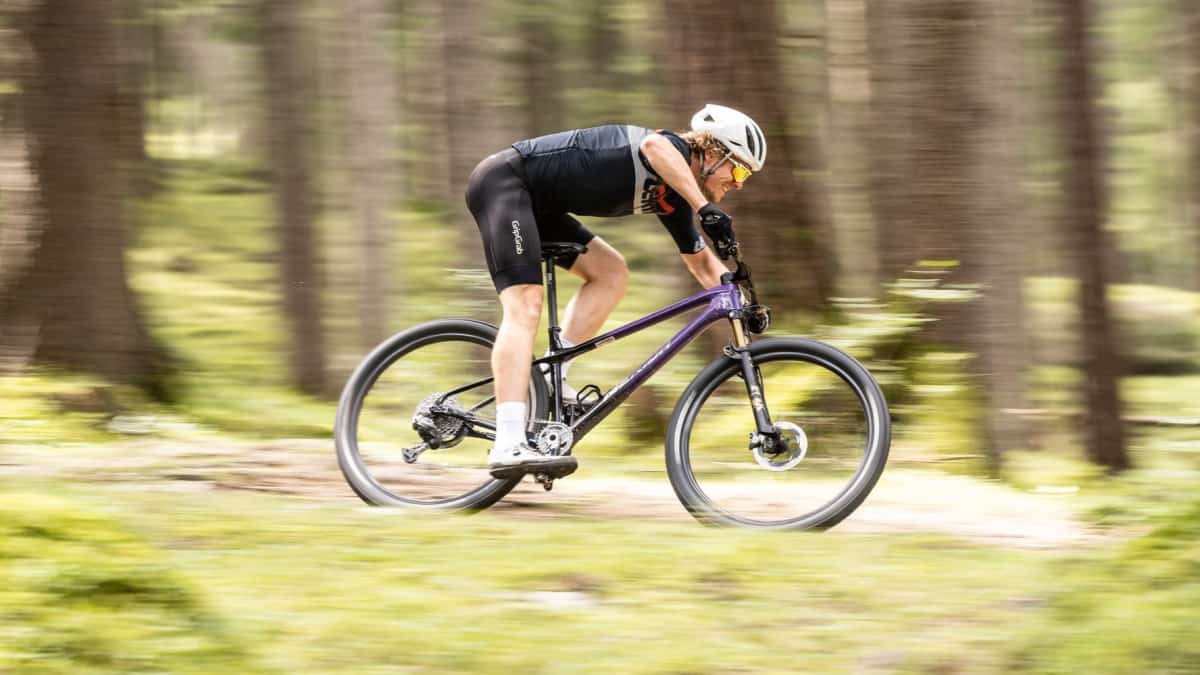
The flat bar position of a classic mountain bike hardtail is often an advantage here: you are more centred on the bike, can work more actively and keep your line more easily on rough surfaces. Especially on steeper descents or unexpected edges, a hardtail feels more predictable for many riders.
Handling and geometry: safety reserves instead of nervousness
Gravel bikes often seem "lively" on firm paths. On technical surfaces, however, this agility can quickly turn into nervousness:
- Many riders need a safety reserve earlier on descents or on loose surfaces.
- In tight, rough bends, a bike designed for stability is often easier to control.
- Those travelling unfamiliar routes benefit from a concept that is more forgiving of mistakes.
Hardtails are designed for precisely these situations: Stability, control and traction are more important than aerodynamics.
Tyres: wide tyres are more than "just comfort"
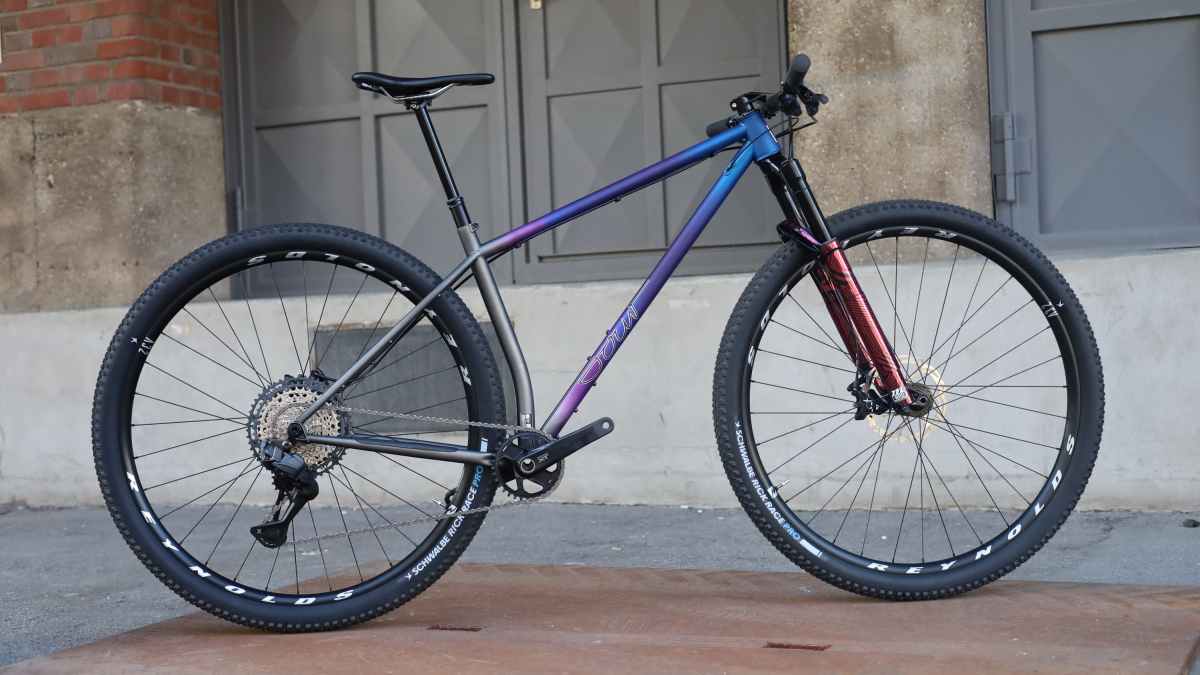
On bikes without rear suspension, tyres are the most important shock absorber - and the most important traction lever. The following values are typical (depending on the model and intended use): On gravel bikes, tyres often measure around 40-45 mm. This contrasts with 2.3-2.5 inches, i.e. approx. 58-64 mm on classic mountain bike hardtails.
What are the benefits of the extra width in practice?
- Greater comfort thanks to lower pressures and more volume: vibrations and shocks are filtered out much better.
- More grip in Cornering and braking: larger, more stable contact area - especially on loose or wet surfaces.
- More traction on hills: less spinning, less loss of propulsion on gravel, forest floor and roots.
- More reserves in the event of punctures (especially tubeless): lower pressures are easier to ride without the tyre becoming unstable.
Important: "Narrow = fast" is too simple. On hard surfaces, a narrower tyre can have advantages, but in the real mix of gravel, dirt, edges and loose sections, the picture often shifts in favour of wider tyres - because you lose less energy through slippage, bumps and corrections.
Rolling resistance vs. reality: speed is not just watts on paper
On tarmac and very firm gravel, aerodynamics, position and high pressures are major factors - this is where the gravel bike comes into its own. However, as soon as the surface becomes rough, there are "hidden costs": You brake more often. You countersteer more. You have to choose lines more carefully. You tire more quickly. A hardtail can ultimately provide a better cut on such routes despite nominally coarser tyres - simply because you can "ride through" longer in a relaxed manner.
Suspension: why an MTB suspension fork is a real gain in control
Many gravel bikes now rely on comfort elements (flexing seat posts, special handlebars/stems or even gravel suspension forks). This improves the riding experience, but rarely replaces the function of a real MTB fork when things get rough.
A hardtail suspension fork typically has 100-120 mm of travel and provides more directional stability off-road, as the front wheel follows the ground better and bounces less. It also gives you more control when braking on rough surfaces. In addition, there is less fatigue in the arms and hands and more safety reserves. This is not just comfort, but direct performance and safety benefits.
When the hardtail is the better alternative
For many riders, an MTB hardtail is the better "gravel alternative" when ...
- your routes are often unknown and you don't know in advance how rough the surface will really be
- you regularly ride forest paths, rough gravel, damp passages, roots or easy trails
- you want more safety and control downhill
- you're looking for a bike that forgives mistakes and remains stable in changing conditions
When the gravel bike has an advantage
A gravel bike is usually the more suitable choice when ...
- you drive a lot on tarmac and gravel is rather "fine and firm"
- you train athletically and strongly prioritise aerodynamics/position
- you prefer long routes at a constant pace and trail sections are rare
Conclusion
The gravel bike is a strong concept for fast mixed terrain - and also a popular trend. However, if you regularly venture into real off-road terrain - or simply want a bike that remains confident on changing surfaces - the MTB hardtail is often the better, more robust and safer solution. Wide tyres, off-road geometry and a real suspension fork deliver advantages precisely where gravel bikes are most likely to reach their limits. This gives you a much broader base - with manageable disadvantages.


Florentin Vesenbeckh
Editor CvD
