Verdict on the Ridley Noah Fast 3.0 test
A highly configurable fun machine for fast riding, without the premium that other brands demand
Data and facts about the Ridley Noah Fast 3.0
| Weight | 7.8 kg |
| Drivetrain | SRAM Force AXS |
| Front brake | SRAM Force |
| Wheelset | DT-Swiss ARC 1400 |
| Front tire | Continental Aero 111 29-622 |
Measurements
You can find all measurements here
The new Noah Fast makes no secret of its purpose. The flat frame has all the ingredients of an aero flounder: deep head tube section, flat tube knots and a Kammtail profile on the down tube that shields the bottle. The equipment emphasises the claim to set a good pace; there is the long, slightly downward-pointing stem, which creates a riding position as if for a professional cyclist. Ridley also dispenses with the front derailleur on this version and instead combines a single aero crank with a SRAM Force XPLR 13-speed gearbox. The 65 millimetre high DT Swiss wheels are fitted with Conti's Aero 111 tyres, a bank when it comes to aero performance. From the seating position to the equipment, there is nothing more to do to make the bike even faster. Only the front tyre could be reduced in width from 29 to 26 millimetres.
Wind tunnel performance
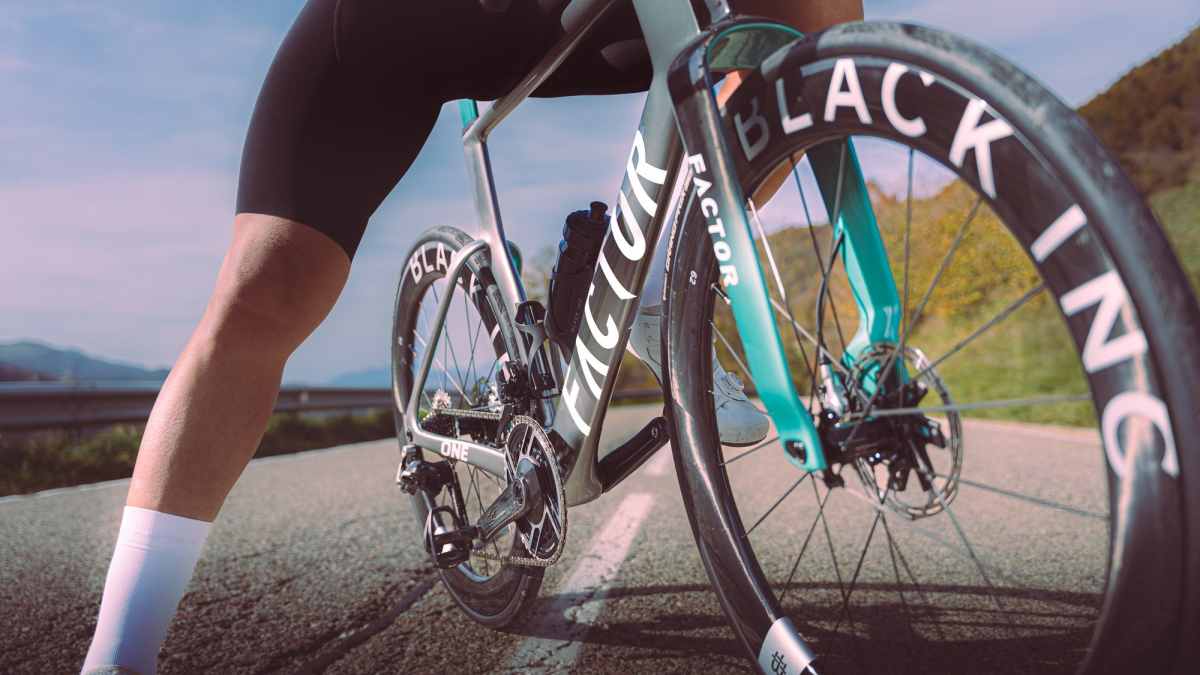
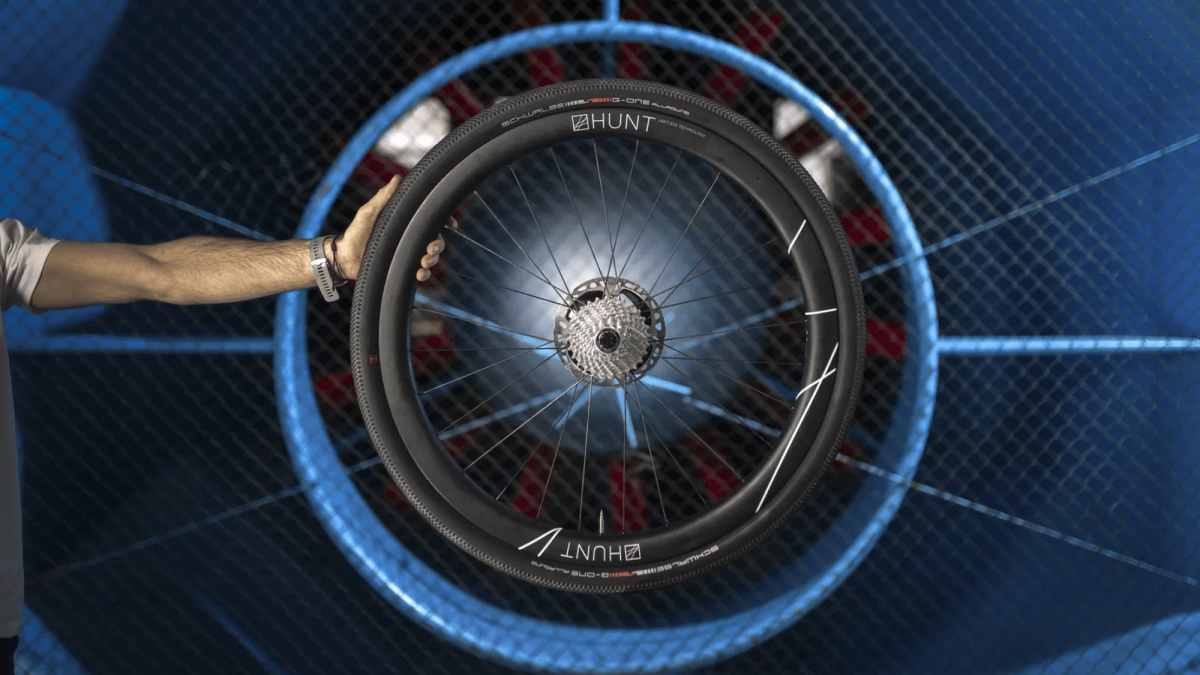
In the wind tunnel, Ridley's recipe impresses with very good all-round performance. The bike sails well in a diagonal flow, but doesn't quite reach the fabulous values of Merida and Stromm. With wind from the front it looks similar. The head tube section is not as slimmed down as on the fastest bikes, but the Ridley is still just ahead of the Factor One. We measured a weighted average of 202 watts for the Noah Fast. A very good value, which makes it a true aero bike. This is not a surprise, as Ridley has its own in-house wind tunnel to fall back on during development.
Driving characteristics
The riding characteristics reflect the equipment and orientation: the very long, flat riding position (STR+ quotient below 1 for the first time!) is virtually synonymous with constantly riding in the lower link position. As the drop of the handlebars is low, the lower handlebars are always within reach and it goes down another level. The handling with so much pressure on the front is lively and fun. The somewhat high weight due to the simpler equipment hardly slows down the play instinct. We found the 1x13 gearbox rather limiting, which made a distinct grinding noise in the lightest uphill gear; the vibration could be felt in the soles of your feet. The large gear jumps are also not ideal for a road racer aimed at flat to hilly terrain. If you live close to the dyke, have a lot of pressure and rarely climb, you might still be happy with it. If you want an all-round set-up, it's better to go for the 2x12 version, which is available from the extensive modular system.
Individualisation
Individualisation is the trump card with Ridley anyway: five stem lengths from 85 to 145 millimetres and three stack heights (55, 75, 100 millimetres) allow the hand position to be adjusted over a wide range with different handlebars alone. The most important thing, as with any road bike with an integrated cockpit, is to determine the correct handlebar position. A fitting should be carried out before purchase if the coordinates are not completely certain. The frame is available in five sizes. In terms of design, Ridley offers many more options than in terms of geometry. The basic paint scheme can be selected for a surcharge from 399 euros, as can the individual colours and the type of finish. This allows the bike to be customised to such an extent that the likelihood of encountering a duplicate is close to zero. Our test bike is dispatched for 8,809 euros including power meter, with a dual-speed Ultegra Di2 (without power meter) it is a few euros cheaper. Cheaper wheels are also available as an option, which can save you more than 1,000 euros. A highly configurable fun machine for fast riding, without the premium surcharge that other brands demand.
- Price: 8809 Euro
- Weight of complete wheel: 7.8 kilos
- Info: www.ridley-bikes.com
- Frame sizes: XXS, XS, S, M, L (test size greased)