


Mahle M40 e-bike motor in test: Lightweight & super powerful - German-Spanish DJI alternative
Florentin Vesenbeckh
· 08.04.2026


BIKE conclusion on the Mahle M40
Full power with a compact design and low weight - this combination makes e-mountainbikes better. The performance of the small Mahle power pack is absolutely remarkable, because the M40 easily puts a Bosch CX in its pocket. The biggest disadvantages are the noticeable background noise and the currently still limited availability of bikes. We are curious to see whether this will change soon.
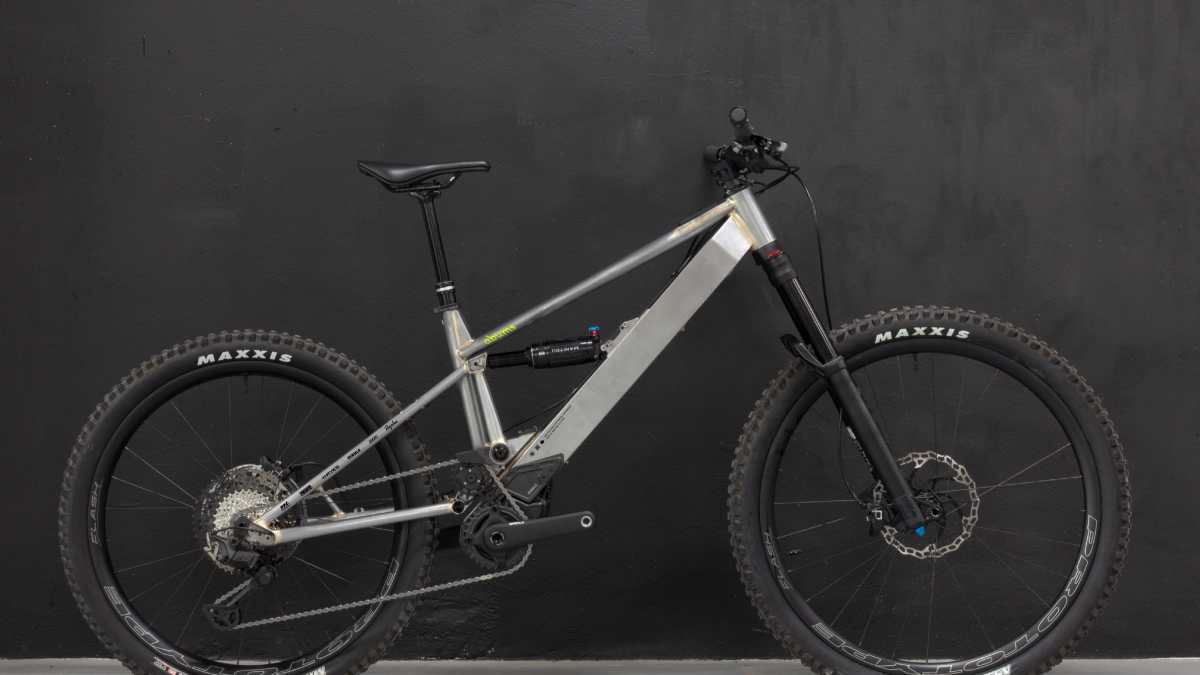
When it comes to hub motors for e-bikes, especially on lightweight road and gravel bikes, Mahle is right at the forefront. The compact Mahle X20 power packs and X35 are rightly the first choice of many bike manufacturers. Now the German automotive giant wants to take off with e-mountainbikes too. The M40 is a classic mid-motor, its core competence: with a compact design and low weight, it still aims to deliver enormous power. 105 Newton metres of maximum torque and a peak output of 850 watts are listed in the data sheet. We were able to test whether the newcomer outperforms the tried and tested Bosch Performance CX in reality - as the bare figures suggest.
Firstly, a brief digression into the world of Mahle: The Mahle Group originated in Stuttgart and now operates internationally as a major automotive expert with 135 locations worldwide. The e-bike division Mahle Smartbike Systems has its headquarters with the entire development department in Spain. Although the focus has so far been on hub motors, Mahle is anything but a blank slate when it comes to e-mountainbikes. The Specialized SL motor, which made light e-bikes socially acceptable with the very first Levo SL, also comes from the Mahle factory and was developed in close collaboration between the two companies.
The facts about the Mahle M40
- Peak power: 850 watts
- Max. Torque: 105 Newton metres
- Support: max. 600 per cent
- Weight: 2.5 kilos (manufacturer's specification)
- Support levels: Level 1, Level 2, Level 3 and Smart Assist
- Wireless remote
- Update with smart functions: Smart Assist, Traction Control and Auto Hold
- Setting the motor characteristics directly via the controls, even without an app
Practical test: This is how powerful the Mahle M40 really is
With a motor weight of just over 2.5 kilograms and a maximum torque of 105 Newton metres, the drive is positioned as a compact power source for demanding mountain bike use. The figures sound ambitious. A comparison with the classic Bosch Performance CX shows this: 2.85 kilos with 100 Nm and 750 watts. We compared the two drives back to back off-road and also got to grips with the systems with comparison rides using watt-measuring pedals and weight equalisation. To cut a long story short: The M40 actually outperforms the Performance CX quite clearly. The torque is really powerful and the acceleration is immense. So far, we have only seen so much power at such a low weight from the DJI Avinox M1 - which, however, is slightly heavier and larger.
Our field test packs the feeling of the trail into hard facts. Armed with watt-measuring pedals and counterbalance weights, we send the Mahle M40 and Bosch Performance CX up our standard climb. The test riders have to cover 90 metres in altitude over a distance of 600 metres, which means an average gradient of a whopping 15 percent. The rider pedals constantly at 220 watts to stimulate the full power of the drives and we levelled the system weight to exactly 120 kilos. In three consecutive comparison runs, the Mahle M40 consistently clocked 1:59, 2:01 and 2:00 minutes. With the Bosch Performance CX with power update (tested here) and with the controls turned up to 100 Nm and 750 watts, the times are 2:24, 2:25 and 2:26 minutes. Mahle's M40 is therefore a good 20 per cent faster - a figure that also reflects our feelings from the practical test. Hats off, Mahle!
Full throttle test: This is how long the engines need for our standard ascent*
- Bosch CX (Power Update): 2:25 min
- Mahle M40: 2:01 min
- DJI Avinox M1: 1:45 min
*Test procedure: 600 metres standard ascent with 90 m gradient (15 % gradient). 220 watt pedalling power, 120 kg system weight, maximum motor support.
Software update ignites next stage
As part of a software update, the M40 is now not only set to deliver plenty of power, but has also improved its soft skills with new functions and a better driving experience. The centrepiece of the update is Smart Assist, a dynamic automatic mode that continuously adapts the engine assistance to the driver's input and terrain conditions. The system analyses parameters such as rider performance, cadence, speed and incline in real time - eliminating the need to manually switch between assistance levels.
In the practical test, we were particularly impressed by this new automatic mode. The motor is very much orientated towards the rider's power input. If you only pedal lightly on flat terrain or flat forest road climbs, the motor only provides gentle support. This allows you to ride smoothly and save energy. If you want to sprint or accelerate on steep sections, the motor responds very dynamically and powerfully to the increased input. Your own performance increases and you feel like Superman with the strongest legs in the world. The control and modulation in this mode is really pleasant and natural. A single support level for the entire tour? That's exactly what Smart Assist delivers pretty well.
Like all modes, Smart Assist can also be customised via the app according to personal preferences. This means you can set the assistance to be more powerful or more energy-efficient, just as you like. This is an absolute success. Compared to the E-MTB and E-MTB+ modes from Bosch, Smart Assist provides a greater range of power and therefore covers a wider power range of motor support. In terms of modulation, however, the Bosch CX is a little more sensitive. However, the M40 also responds superbly to pedal pressure and accelerates lively. It feels absolutely harmonious.
No more spinning thanks to Traction Control?
Another new feature is Traction Control. Using a high-resolution speed sensor on the rear wheel, which takes 84 measurements per revolution, the engine permanently detects the traction on the rear tyre. If slippage is detected, the system automatically regulates the torque output in order to maintain traction. There are similar approaches in other e-bike systems, but no one has implemented this function as consistently as the M40. Good: The feature can be switched on and off depending on personal preference or area of use.
In practice, Traction Control is very noticeable. There is significantly less skidding on the rear wheel and therefore a more predictable riding style. Less experienced e-bikers benefit from this even more than real pros. How helpful the function is depends heavily on the conditions and the surface. In many situations on tour, traction control ensures a smooth, even ride. However, when things get particularly slippery and extremely steep, traction control can also be a hindrance. This is especially true when experienced bikers want to squeeze out that last bit of power on extreme uphills. This is because the reduced torque costs momentum and punch when tackling borderline steep sections. It helps that the function can be activated or deactivated directly on the Mahle lever to suit the terrain.
With Dynamic Overrun, the M40 has another tool at the ready for difficult climbs. The motor's overrun reacts to the situation. The motor responds to powerful acceleration with a longer overrun to make it easier to overcome stones and root passages. When pedalling at a leisurely pace, on the other hand, the motor fades out smoothly and gently. The length of the overrun can also be adjusted in the motor settings (in the app or directly on the display).
The starting aid for the e-bike
With the Hill Hold function, Mahle is introducing a feature that we are otherwise only familiar with from the push-assist mode. If the bike stops in a steep section, the motor automatically applies a kind of handbrake. This prevents the bike from rolling backwards and the rider can start off again in a more relaxed manner. Don't worry: there is no danger of rolling over backwards, as the tilt sensor recognises the position of the bike and releases the handbrake immediately if the situation becomes critical. This feature also gives particularly inexperienced bikers added safety.
For M40 bikes that are already in circulation, the software update should be available from the end of May.
The Mahle M40 at a glance
Strengths
- Very high power
- Lightweight and compact
- Intuitive operating concept
Weaknesses
- Background noise
- Few bikes available

Florentin Vesenbeckh
Editor CvD
