


Conclusion from Adrian Kaether, BIKE Editor
The Fox 38 still appeals to fast riders who like it defined and appreciate a lot of feedback from the ground. On fast, hard hits, the fork is in its element and noticeably picks up here. The traction is remarkably strong, the price remains hefty. The biggest problem: the previous 38 was already an excellent fork. An upgrade is only really worthwhile for active racers with a big wallet.
Reliable in every test
Since the debut of the thick 38 stanchions, the Enduro fork 38 from Fox has been the benchmark for big stunts and fast action. With the ongoing enduro and e-bike hype, the argument from back then is all the more convincing today: e-bikers and heavy riders in particular benefit from the long suspension travel combined with high stiffness. The thick fork also looks right on e-bikes for the first time. The want-to-have factor, especially with the expensive Factory version: guaranteed!
But it's more than just the looks: in the tests of recent years, no fork has delivered such reliably high performance as the Fox 38. From the affordable Rhythm to Performance and Performance Elite through to the Factory, we've hardly seen a fork with so little series variation and so few problems. With the new 38, Fox wants to continue this trend, but has made a few crucial adjustments.
Fox 38 2026 at a glance
- Price: 1499 Euro RRP (Factory top model)
- Suspension travel: 160, 170, 180 mm
- Wheel sizes: 27.5, 29 inch
- Thru axle: 15 x 110 mm
- Offset: 37 (OE only), 44 mm
- Brake standard: 200 mm post mount
- Tyre width: Up to 2.6 inches
- Weight: From 2200 grams, 2447 grams (BIKE measurement - 170 mm, 29 inch)
Focus on the inner workings: Glide Core and GripX2
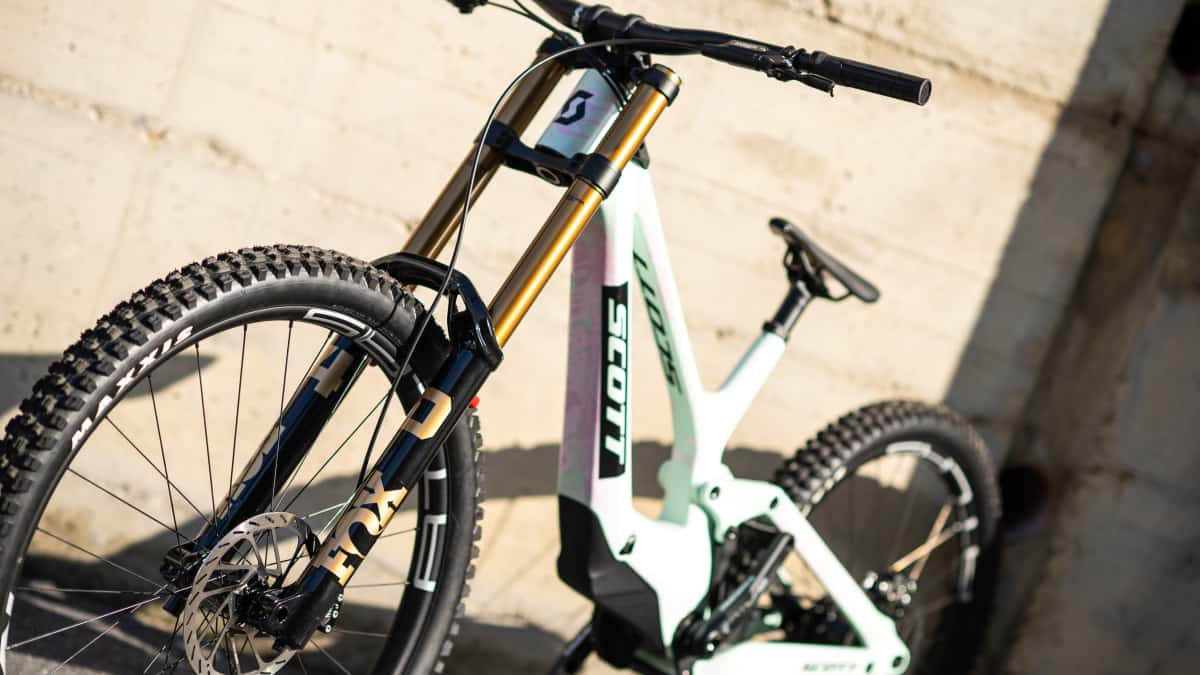
Visually, the new 38 remains unmistakably a Fox Factory fork. The beefy look and the golden Kashima coating are definitely noticeable. However, the most important changes are inside the fork and are not visible from the outside. Like the new Fox 40 downhill fork (all the info here) the 38 also gets the new Glide Core air chamber and the new GripX2 damping. Instead of the tube-in-tube construction of the previous air chamber, Fox has simplified it here. Fewer components mean less friction and a potentially larger air volume, so the argument goes. The new air chamber even protrudes slightly over the crown to maximise the overall volume. The new 38 can therefore be ridden with significantly less air than before, see test impression below. Rubber buffers in the end stops are intended to additionally dampen small vibrations.

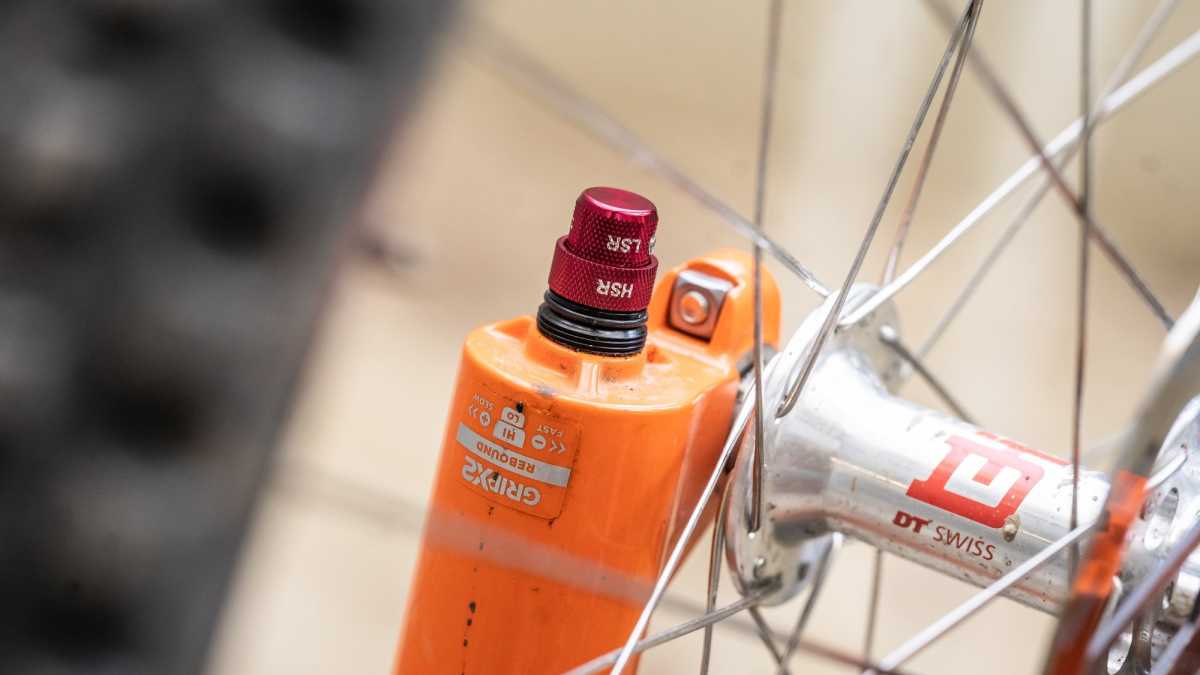
Second important change: The top damping of the Factory and Performance Elite forks is still called GripX2, but has larger holes and stronger cut-outs in the mid-valve. In principle, both are already from the excellent new Fox 36 trail fork (tested here) and the Enduro flagship Fox Podium (test here) known. Fox wants to make it possible to ride with more damping than before for even more traction and control without the fork ever feeling harsh when riding.
Almost an about-turn: A more linear air chamber with more volume, better oil flow: this also means more comfort and less fatigue. In the new Fox 38, the same tendencies are recognisable that Fox has been implementing in the new 36 and the Podium since last year.
Fox 38 Casting: Changes in detail
The external changes remain subtle. Like the Fox 40 and the 36, the Fox 38 has a perforated triple clamp. The bleed valves at the rear of the fork have been revised and the fork is said to be ten per cent stiffer than before, but six per cent softer when steering. The idea behind the subtle changes: More brake stiffness prevents the fork from tilting under load, effectively improving response behaviour. The slightly lower steering stiffness is intended to give the fork a little more grip in demanding situations, for example on sloping terrain. Our test fork weighs 2,447 grams. This means that the weight remains exactly the same as its predecessor to within a few grams.
How the new Fox 38 rides
We had the privilege of being able to ride Fox's new luxury fork extensively for two days on the Finale trail classics of "Pino Morto", "DH Men" and "Little Champery". All of these are crisp enduro trails, which we at BIKE have also used for large bike and suspension fork comparison tests. The fork we have invested in the Santa Cruz Bullit GX AXS (reviewed here) which we rode before and after with an "old" 38 Performance Elite GripX2 - but we still have to submit a direct comparison of old and new.

What is immediately noticeable during setup is the air pressure. While we rode the previous 38 with a rider weight of 85 kilos with a good 100 PSI in the air chamber, 86 PSI is sufficient for the new fork. That doesn't sound like a drastic change, but it shows how the larger air chamber affects the fork. Nevertheless, the ride feel as we set off on the first descents is typical Fox. Sensitive but controlled, the new 38 works its way along the ground, but is still very high in its travel. With the compression damping half-closed, long descents continue to give us a set of burning forearms and a clear message: the rider's training status - expandable!
On the other hand, the 38 parries even big hits with remarkable ease and confidence and perhaps even a little better than its predecessor. The traction that the fork builds up is also impressive in our first test. Nevertheless, our mission is to tease a little more comfort out of the fork. So we open the compression stage to the last third and leave the throttle open. The 38 still rewards a fast pace. Where the previous fork became increasingly firm on fast, hard hits, the new 38 now opens up noticeably. But the racy, firm character remains. The full potential of the fork can only be unlocked when the rider hits it hard. When riding slowly and cautiously, it is difficult to bring the fork fully into the working range.
Strengths
- Traction and response behaviour
- Enormous control even with hard blows
- Increased comfort thanks to new compression stage and air spring...
Weaknesses
- ...but still with a racy, taut character
- High price


Adrian Kaether
Editor
