


New MTB forks and shocks: RockShox Lyrik, ZEB, Vivid & Super Deluxe - the new benchmark?
Max Fuchs
· 07.04.2026


Conclusion from Max Fuchs, BIKE editor
With high-end forks - especially in the enduro segment - you still often get the feeling that the needs of professional racers are at the centre of development. The forks all work first-class, no question about it. However, they often only realise their full potential when you push them to the limit. In other words, for those who ride in a more relaxed manner and are more comfort-orientated, many of the current forks on the market are simply too stiff. With the development approach of the new RockShox forks - and the corresponding rear shocks - the industry giant is setting a new direction in this respect. As the entire new range is aiming for a more linear spring characteristic and is pulling out all the stops to reduce frictional losses, the new RockShox suspensions are more comfortable than ever and therefore perfectly match the requirements profile of the masses.
RockShox has been working on its new generation of forks for four years - the longest product cycle in the company's history. The result is two completely newly developed suspension forks: the Lyrik for trail and all-mountain use and the ZEB as an enduro and gravity fork. These are joined by two completely new shocks: the Super Deluxe to match the Lyrik and the Vivid as a sparring partner for the ZEB. We have already been able to test the new products - here are all the technical details and a first test report.

In the video: BIKE checks out the new Rockshox forks and shocks
Lyrik and ZEB: Technically almost identical
Firstly, the most important thing: Lyrik and ZEB share the same technological basis. Both forks rely on identical innovations for air suspension, damping and friction reduction. The difference lies in the stanchions - the Lyrik still uses 35 mm stanchions. Paired with the weight-optimised casting, it is slightly lighter and smoother: 2,280 grams in 29 inches. The ZEB weighs 2,568 grams with its thicker 38 millimetre stanchions, but offers more stiffness.
Practical: RockShox has again increased the travel range of the Lyrik to 140 to 170 millimetres. The predecessor stopped at 160 millimetres. Enduro riders can now decide for themselves whether they want the lighter Lyrik or the brute ZEB. The ZEB covers 150 to 180 millimetres. In terms of price, both Ultimate versions are at a similar level: €1,375 for the Lyrik, €1,415 for the ZEB.
RockShox Lyrik Ultimate
| Feature | details |
| Damping | Charger 3.2 with ButterCup |
| Air spring | LinearXL with ButterCup |
| Spring travel | 140 / 150 / 160 / 170 mm |
| Fork offset | 37 mm (27.5") / 44 mm (27.5") / 44 mm (29") |
| Wheel size | 27,5" / 29" |
| Weight | 2.280 g (29") |
| RRP | 1.375 € |
RockShox ZEB Ultimate
| Feature | details |
| Damping | Charger 3.2 with ButterCup |
| Air spring | LinearXL with ButterCup |
| Spring travel | 150 / 160 / 170 / 180 mm |
| Fork offset | 37 mm (27.5") / 44 mm (27.5") / 44 mm (29") |
| Wheel size | 27,5" / 29" |
| Weight | 2.568 g (29") |
| RRP | 1.415 € |
The centrepiece: Linear XL air spring in cartridge design
At the centre of all the innovations is the new Linear XL air suspension unit in cartridge design. Its trademark, as the name suggests, is a very linear spring characteristic. The force required to compress the spring increases evenly over the entire spring travel - almost like a steel spring. The result is a predictable, consistent ride feel: sensitive at the beginning, plenty of support in the middle and bottom-out protection at the end of the travel to parry even hard impacts. However, RockShox does not rely solely on the air spring to create the linear ride feel. RockShox developed the following technologies all in favour of the linear spring characteristic and ensure that the Linear XL can work at its best.
AirAnnex: More volume, even progression

Hidden under the cover at the lower end of the air spring side is the so-called AirAnnex - a feature that downhill and enduro World Cup fans are already familiar with from some professional race bikes. This is not a complicated high-tech component, but simply air: the chamber increases the air volume in the left dip tube. As the damping unit in the right-hand dip tube is more compact than the Linear XL air spring cartridge, both sides would work with different volumes without additional volume - and produce uneven progression during compression. The AirAnnex compensates for this.
Breather Holes: The fork must be able to breathe!
RockShox has also drilled two holes directly below the oil seal in each stanchion tube - the so-called breather holes. They enable faster and more even air circulation in the casting during compression and thus prevent unwanted progression peaks.
Volume spacers remain possible
Those who prefer a more progressive characteristic can now breathe a sigh of relief: even though everything on the fork is designed for the most linear characteristic possible, volume spacers can still be installed to fine-tune the fork to personal preferences. The new features are only intended to prevent unwanted, uncontrolled progression.
ABO: Necessary addition to the linear air spring
The more linear characteristic curve has a small side effect: although the maximum suspension travel is more usable, without the stronger end progression of the predecessor, the fork also bottoms out more easily. This is where the ABO (Adjustable Bottom Out) comes into play - a bump stop that can be adjusted with an Allen key. Depending on the setup, it intervenes in the last 7 to 17 millimetres of the suspension travel and absorbs hard impacts.
ButterWagon technology: Less friction thanks to permanently lubricated bushings

The second major development focus: friction reduction. RockShox is introducing ButterWagon technology for this purpose - a network of many small recesses on the stanchions, below the oil seals. Each time the suspension compresses, the recesses absorb oil and transport it over the bushings during rebound, where it is released again. This continuous oil transfer ensures permanent lubrication of the sliding bushes, reduces friction and improves durability. The system is supplemented by more viscous oil, new grease and revised wipers.
Charger 3.2: Less friction requires more damping
Less friction only sounds like an advantage at first - but it has a logical consequence: as friction acts like additional damping during compression, the new, lower-friction forks need a firmer damping tune. This is why the new Charger 3.2 damping cartridge is used, which provides more damping in the system overall.
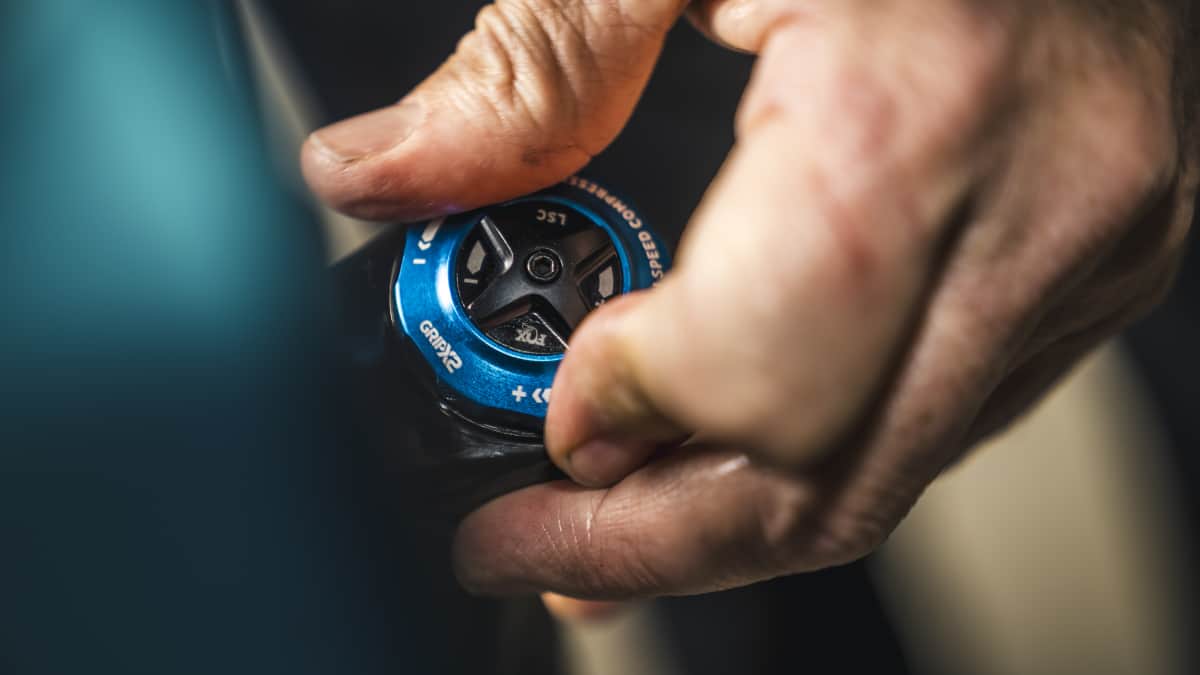
The range of functions remains the same compared to the Charger 3.1 from the predecessor forks: rebound adjustment and separate high and low-speed compression damping, all manually adjustable. The numbered compression adjusters are new. The numbering is intended to make tuning easier and simplify the setup process - especially in comparison to some of the competition, which make things much more complicated.
Super Deluxe and Vivid: The right shock absorbers
The new forks are joined by two completely newly developed dampers. The Super Deluxe is designed for trail and all-mountain use and is the perfect partner for the Lyrik. The Vivid serves the enduro segment and harmonises best with the ZEB. The Ultimate version of the Vivid costs 850 euros, while the Super Deluxe Ultimate costs 765 euros.
What Vivid and Super Deluxe have in common
Both dampers also receive a more linear Linear XL air spring and a new RCT2 damping tune so that fork and damper harmonise perfectly. Also new: the compression adjusters are now numbered in the same way as the forks. The rebound adjuster can be easily pulled out - at its end is a small Allen key that fits all the other adjustment screws on the shock. This makes fine tuning possible even without a mini tool.

Damper: Technical data at a glance
RockShox Vivid Ultimate
| Feature | details |
| Field of application | Enduro |
| Air spring | Linear XL |
| Puncture protection | ABO (hydraulic, adjustable) |
| Setting options | HSC, LSC, Rebound, ABO |
| RRP | 850 € |
RockShox Super Deluxe Ultimate
| Feature | details |
| Field of application | Trail / All Mountain |
| Spring | Linear XL |
| Puncture protection | Fixed stop buffer |
| Setting options | HSC, LSC, Rebound |
| RRP | 765 € |
Differences in breakdown protection
In keeping with the Vivid's tough range of use, the shock has adjustable bottom-out protection - previously known as HBO (Hydraulic Bottom Out), it is now uniformly called ABO, to match the designation on the forks. Technically, it remains a hydraulic system that can be used to fine-tune the compression damping over the last 20 per cent of the spring travel. The Super Deluxe, on the other hand, has no adjustable bottom-out protection - here, only a bump stop absorbs hard landings.
In addition, the characteristic curve can also be trimmed more progressively via the air volume. And here comes the technical highlight of the new Super Deluxe: instead of the classic volume spacers, RockShox uses a completely new system to adjust the air volume in the shock. Namely via an O-ring in the outer air chamber.

First ride impression: How the new forks and shocks perform
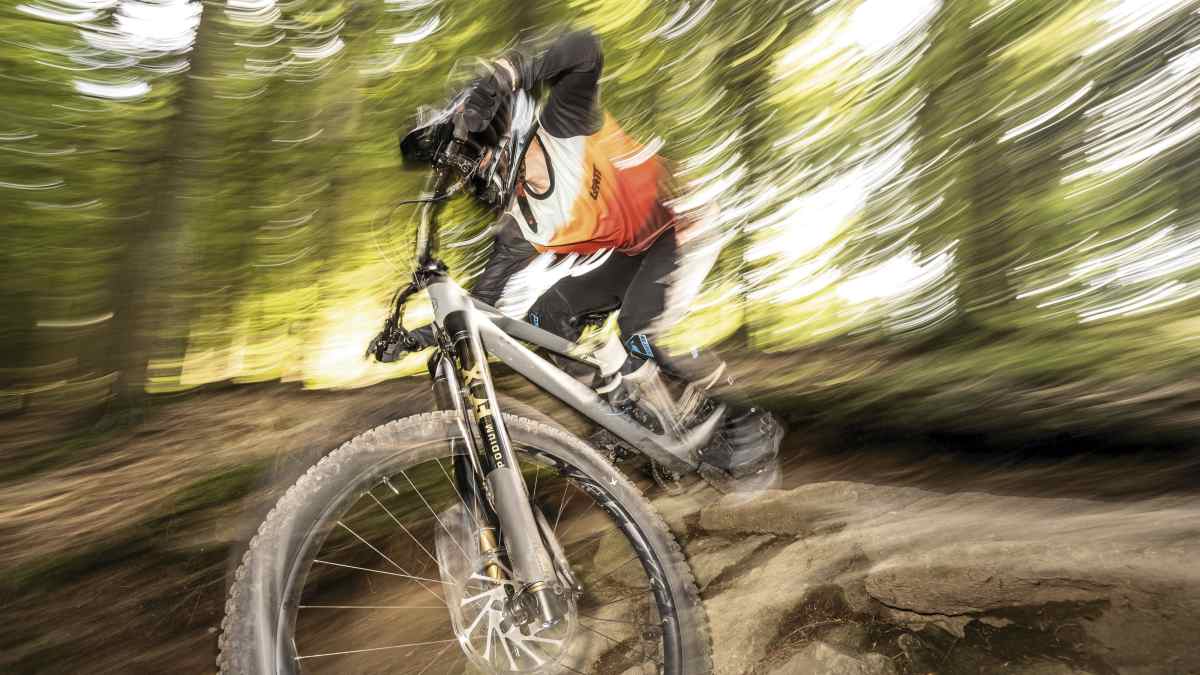
ZEB and Lyrik are more comfortable than ever. Both forks utilise the entire suspension travel without any problems, reacting to subtle bumps at the beginning of the travel as smooth as butter and offering excellent traction. Lower down in the travel, they provide a pleasant amount of support and you always have the feeling of knowing exactly where you are in the travel - predictable, just like the linear spring characteristic.
On high-speed sections in particular, the ZEB literally eats up rough hits and smooths out even nasty steep sections or root carpets - just as a high-end enduro fork should. In our estimation, the new ZEB even comes close to the Fox Podium, which currently sets the benchmark in the enduro segment. In terms of traction and directional stability in corners or off-camber sections, however, the Podium is still the benchmark due to its design and significantly lower torsional stiffness.
What was most surprising: how gentle the forks are on the rider's power reserves. During the press camp in New Zealand, bike park laps were on the programme day in, day out. And where our test rider usually has to take one arm pump break after another towards the end of the day, with the new ZEB we were able to do full runs without a break even on the last descent. It is impressive how effectively the fork with its new technologies keeps vibrations and bumps away from the rider.
It is more difficult to make a clear judgement on the shocks because the performance here depends heavily on the rear end of the respective test bike. In general, however, it can be said that the new Linear XL air spring is clearly noticeable on both the Vivid and the Super Deluxe. Both respond silky-smooth and are actually reminiscent of the linear ride feel of a steel spring shock. And the most important thing: both harmonise perfectly with the respective fork on our test bikes.

Max Fuchs
Editor
