


Anyone who loves their bike secures it - not only with a steel cable, but often also with insurance. But in the event of theft, you are in for a rude awakening: The insurance company won't pay out because the lock didn't meet the requirements. We explain which criteria are decisive for insurance cover and why "locked" is not the same as "secured".
Bicycle theft is a perennial favourite in Germany's crime statistics. Especially with expensive e-bikes and high-quality racing bikes, a simple lock is often no longer sufficient in everyday life. Anyone who takes out household contents insurance or special fully comprehensive bicycle insurance is often lulled into a false sense of security. This is because the small print of the policies often contains precise specifications regarding the type and quality of security.
Duty of care: Do not provoke the theft
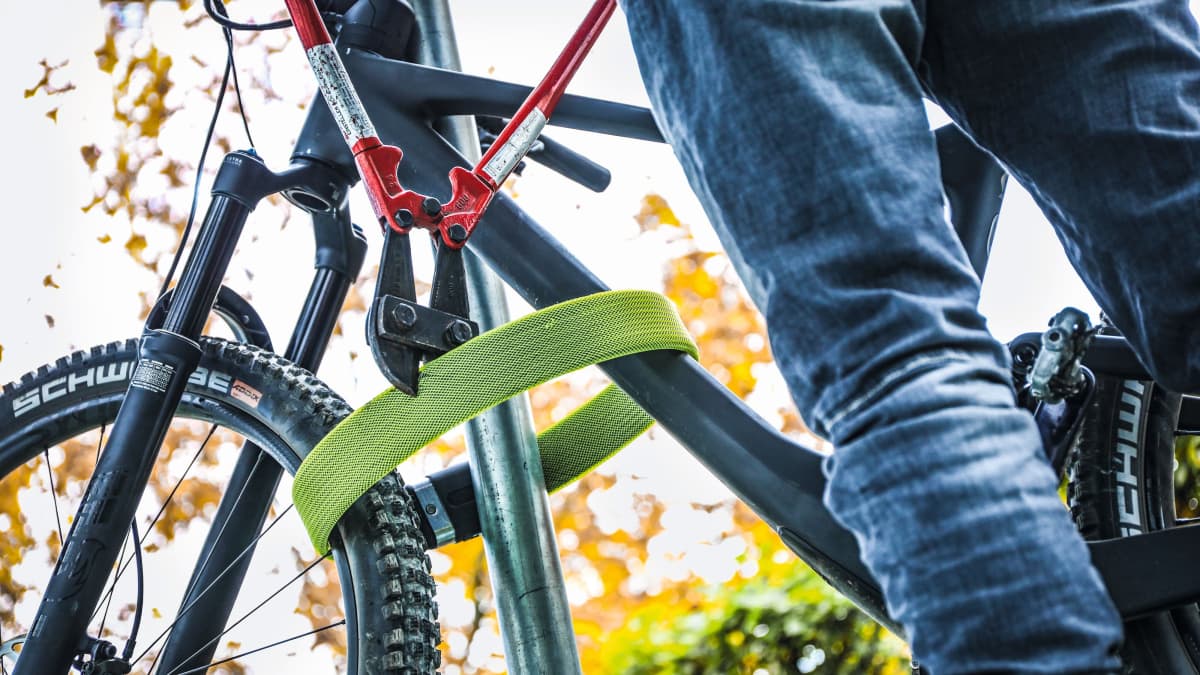
Insurers talk about the so-called "duty of care". In the eyes of many insurance companies, anyone who only secures their bike with a simple frame lock is acting negligently. The basic rule is almost always: the bike must be locked to a solid object (lamppost, ground anchor, bicycle stand). Simply locking the rear wheel is usually not sufficient, as the bike can be easily carried away or loaded.
Certificates as currency: VdS and ART
Instead of relying on the (often marketing-driven) safety levels of the manufacturers, insurers rely on independent testing institutes. The two most important seals on the German market are

- VdS (trust through security): The German authority for loss prevention. Many insurers explicitly require locks with VdS certification.
- ART certification: A Dutch system that categorises locks into stars (1 to 5). Specialised e-bike insurers in particular often require an ART lock of level 2 or higher.
The minimum price: an outdated but present rule
Some older household contents contracts still contain the clause that the lock must have a certain purchase value (often 25 euros or 50 euros). In times when a high-quality U-lock can quickly cost over 100 euros, this rule seems outdated. Nevertheless, cyclists should definitely keep the proof of purchase of the lock in order to be able to prove that the security was appropriate in the event of damage.
Documentation: Proof counts in an emergency
If the bike is gone, the burden of proof lies with the insured person. To ensure smooth reimbursement, you should have the following documents to hand digitally:
- Proof of purchase of the bicycle: Including frame number and exact model designation.
- Proof of purchase of the castle: As proof of the quality of the backup.
- Photos: If in doubt, a photo of the connected bike in the parking space (e.g. in the basement at home or in front of the office) can help to prove that it has been secured correctly.
- All keys: Insurers often require all original keys to be sent in after a theft to ensure that the lock was not simply opened with the key (because it was left in the lock).
Conclusion: Read the policy first, then buy the lock
Today, a bike lock is more than just theft protection - it is the prerequisite for your financial protection. Anyone insuring a new e-bike or expensive sports equipment should first take a look at the insurance conditions: Is a VdS certificate required? Is there a lower price limit? Only those who can answer these questions are making the right investment in safety.
CHECKLIST: Am I covered in the event of theft?
- Insurance conditions checked: Does my insurer require a special seal (VdS, ART) or a minimum price for the lock?
- Proof of purchase secured: Have I filed the receipt for the lock (digitally)? (Important for the proof of purchase value).
- Frame number noted: Is the frame number of my bike stored in the insurance policy or in an app (e.g. bike pass)?
- Correct locking: Am I using a firmly anchored object? (Caution: a wire mesh fence is often not considered "solid enough").
- Key inventory: Do I still have all the original keys for the lock? (Tip: make a note of the number on the key in case you need to order a replacement).
- Crime scene photos: Do I have an example photo of how and where I usually secure my bike (e.g. in the communal cellar)?
- Second lock option: For very expensive e-bikes: Does the insurance company even require two different locks? (Often with high-end policies over 5,000 euros).

Stefan Frey
Editor
