


Planning a bikepacking tour: How much luggage you need for a bikepacking tour
Sandra Schuberth
· 02.03.2026

In this article, we use so-called affiliate links. With every purchase through these links, we receive a commission from the merchant. All relevant referral links are marked with . Learn more.
How much luggage do you need for bikepacking? Almost everyone planning their first, second or third bikepacking tour asks themselves this question. You probably do too. And I totally understand them. Especially before the first tour, the questions feel huge: What do I need to pack? I don't even have a tent, do I have to buy one for it to count as a bikepacking tour? How many pairs of cycling shorts? 7 days, 7 pairs of pants?
Many people want a clear number. 10 kilos. 25 litres. A perfect packing list. I have to disappoint you: there is no such thing. But I can help you to develop a feeling for what for you makes sense. But in the end, you have to make the decision. Or rather the decisions. To do this, you need to answer a few questions. The answers will lead you to your packing list. And then you'll also know how much luggage you need to take with you on your tour.
Duration of the tour and amount of luggage
The first question is: How long do you want to be on the road? First of all: your luggage won't double if you're travelling for twice as long. I have the same amount of luggage under the same conditions, regardless of whether I'm travelling for a weekend or a week.
For me, it's usually one or two pairs of pants, a pair of socks, a T-shirt or longsleeve and a pair of leggings or shorts for the evening and for sleeping. I almost always have a puffy jacket with me. For cycling, I wear a complete outfit and have a change of trousers in my luggage.

Of course you can also pack a change of jersey or shirt. But that takes up more space and makes your luggage heavier. And you have to lug every gram up mountains.
Tip: It's better to wash your clothes in between. This will keep your bike lighter, your daily packing will be quicker and you will have less packing volume.
What really determines your bikepacking luggage is not the duration, but how you spend the night, the weather, the temperatures.
Overnight stay: tent, bivouac, hotel
If you are travelling with a tent, you have all your accommodation with you:
- Tent
- Sleeping bag
- Sleeping mat
- Game changer for many: an inflatable pillow
That adds volume. And weight. And sometimes curses.
For me, the latter is always when I'm waiting for the tent to dry in the morning, when packing takes a long time and when a climb is particularly energy-sapping. There are those moments when I park my bike in the basement of a hotel and think: "Why am I carrying all this with me?"
No desire to pitch the tent in the rain. No desire to pack everything up wet. I'm looking forward to my dry room and a hot shower while my tent, sleeping mat and sleeping bag hang untouched on the bike.
Tent means freedom? It's not quite that simple. Wild camping is prohibited in many countries - partly because there are always people who leave rubbish, fire pits or toilet paper behind. If you want to camp legally, you have to rely on campsites or private plots that are offered, for example via platforms such as Nomady.
Without a tent, your luggage will immediately become much lighter. That's your decision - and your wallet's too.
If you already have a light, space-saving setup, campsites are often cheaper than hotels. If you have to buy everything new first, a tour with a hotel, guesthouse or rented equipment for the first time can be a more relaxed and cheaper solution.
Tip: Plan with what you have.
This must always be
For me, there are things that belong on every bikepacking packing list:
- First aid
- Tool
- Rescue blanket
- Sun cream
- Toothbrush kit
- Period products if necessary (e.g. menstrual cup - less luggage, no rubbish)
I don't argue about that. Sometimes small things can make the difference between cancelling or continuing. On a winter tour lasting several days - in the middle of a lockdown - I had nowhere to go to warm up. My right foot was so cold that I seriously considered cancelling. I had Toe warmer with me, a Christmas present from my mum. They saved my trip. And I had hesitated to pack them. But they simply saved my tour.
Weather, temperature and season
You'll have guessed it. You pack differently for a summer bikepacking tour with balmy nights than for changeable weather or wintry conditions.
On another winter bikepacking tour, I had four pairs of gloves with me. For different temperatures and to change when one got soaked with sweat. I didn't regret it, it was just right.
Think about it: What do you normally wear on the bike in the conditions you're facing? What can you do without?
For me, a second jersey is a luxury. A second pair of cycling shorts, on the other hand, is essential to keep seat problems at bay.
Cooking, Supermarket, Restaurant
Many people think that a cooker is as much a part of bikepacking as a sawn-off toothbrush. I see it differently. I often do without it - both the cooker and the sawn-off toothbrush.
I ride a small bike, which means I have less space for luggage. If possible, I ride without a handlebar bag. I prefer to eat out or shop at the supermarket and eat cold. Of course, not every tour has a restaurant, snack bar or supermarket in the evening. Then you have to shop beforehand.
A cooker means:
- more weight
- more packing volume
- home-brewed coffee or tea in the morning
A restaurant means:
- Less luggage
- no hot food and no coffee if there is no restaurant or coffee shop
With or without a cooker: both are fine. You just need to know what is more important to you and what infrastructure your planned tour offers. For me, cooking food on a camping cooker is a romantic notion that has little to do with reality. My reality is usually: I'm tired in the evening and don't feel like cooking - and washing up afterwards.
With or without a cooker: both are right. It depends on your tour and your priorities.
Personal comfort
Decide what is right for you Personal comfort items are. This may look very different for you than it does for me. For example, I don't use a hairbrush - the longest I went without one was around three weeks. Instead, I always have a second pair of cycling shorts in my luggage, even at bikepacking events. I quickly get problems in the seat area. It helps me to change my trousers. Your luxury item can be a pillow, a nice tent lamp, a book or a sleeping mask.
Tip: Avoid unnecessary items but pack things that will make your trip much more enjoyable.
How much actually fits in the pockets?
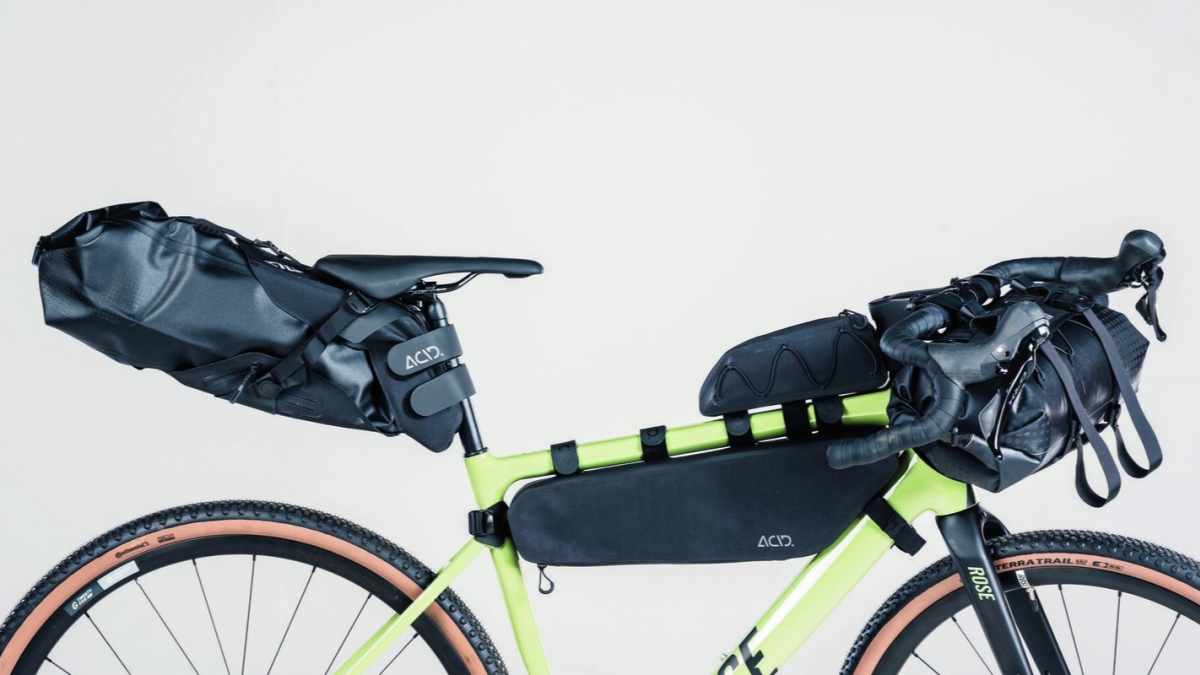
Perhaps you now have a rough packing list. If you already Bikepacking bags. Then try out whether you can fit everything in. Especially at the beginning, I was always asking myself at this point: What can I cross off my packing list to get everything stuffed into my bags?
Conclusion
How much luggage you need when bikepacking doesn't just depend on the route. It depends on how you want to travel. My packing style changes all the time, depending on my objectives.
For a bikepacking event like Badlands I pack minimally, for the Bright Midnight in Norway I had a full rain suit out Rain jacket with hood, short rain trousers, Overshoes and Rubber gloves with me. For tours with more time off the bike, I pack more.
You learn with every tour. And at some point you realise: You think less about it. You know what you need, you know your comfort items and are aware of unnecessary ballast. This learning process is also bikepacking.
These questions can help you with your packing:
- What do I need every day? (sun cream, toothbrush)
- What gives me security - also in my head?
- What can I buy on the way? (e.g. snacks)
- Do I have it or do I have to buy or borrow it?
- How much comfort do I want?
FAQ: How much luggage do you need for bikepacking
How heavy should my bikepacking luggage really be?
As light as possible. But as heavy as necessary.
Eight to twelve kilograms is normal for a three to seven-day summer tour with a tent. If you end up at 14, you're not a failure. If you end up at seven, you're not a pro.
More important than the number is: Are you still relaxed - or are you just fighting against your luggage?
Is 20 litres enough for a week of bikepacking?
Yes, if you know what you're doing. No. If you pack for every eventuality.
20 to 30 litres is realistic for many beginners with a tent. Those travelling without a tent often manage with significantly less.
Do I have to ride with a tent for it to be "real" bikepacking?
No.
Bikepacking is not a competition in sleeping outside. If you stay in a hotel, it's still bikepacking. If you hire equipment, it's still bikepacking. If you don't have a cooker with you, it's still bikepacking.
You decide the rules of your tour.
Do I need a cooker - or is this just Instagram romance?
A cooker is practical. But it is not a compulsory programme.
If you have infrastructure, you can go out to eat or shop at the supermarket. If you want maximum independence, take a cooker with you.
The more honest question is: do you really feel like cooking in the evening - or do you just like the idea of it?
How can I tell if I've packed too much?
- If you're already swearing while packing
- When you can barely handle your bike
- If you drive around with 1000 things that you don't use
- Exception: Tools and first aid should always be with you and you always hope you won't need them.
Too much luggage rarely feels wrong until the third day - you usually know it as soon as you set off.
Many will say no-go. I say: it depends. For me, an e-gravel bike opened up completely new possibilities on a weekend tour and levelled out big differences in performance.
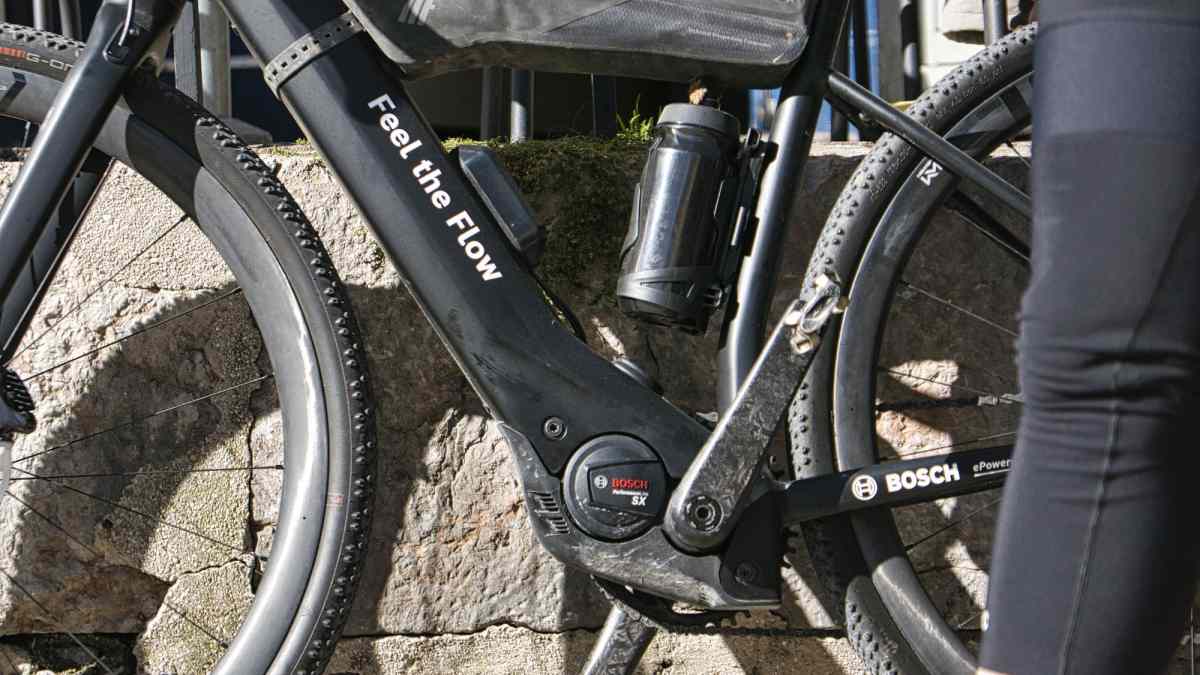
Now you know how much luggage you need for a bikepacking tour. But which bike?
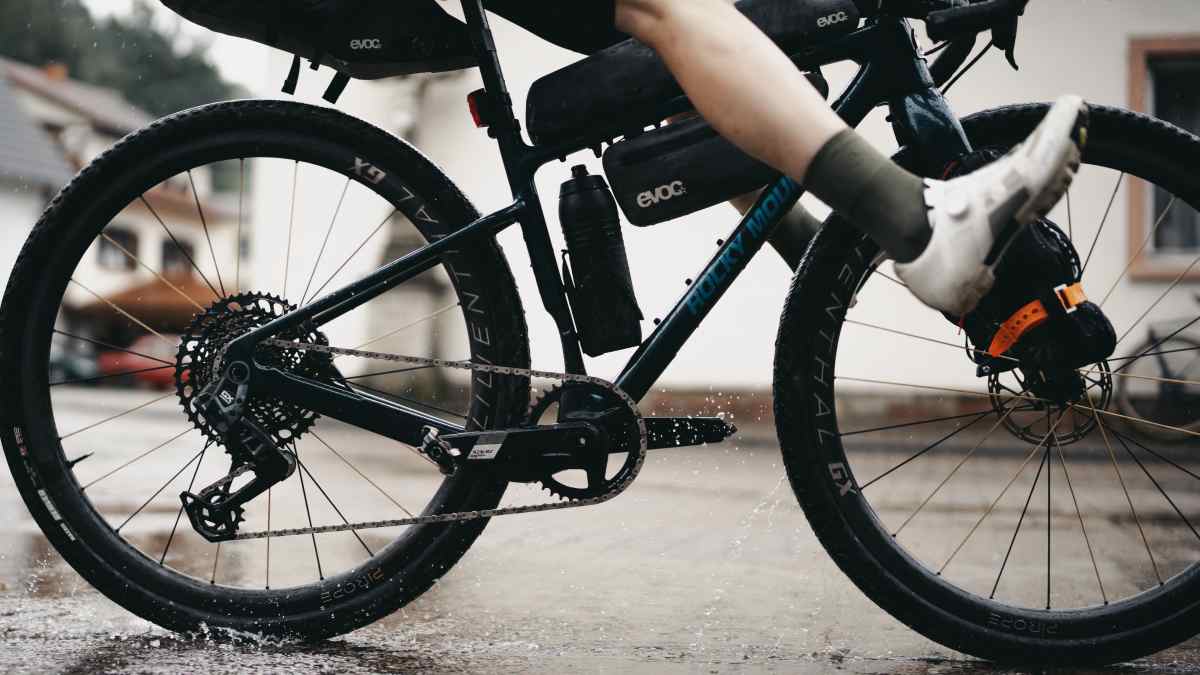
And where to put the luggage?

Sandra Schuberth
Editor
