


The number of ultramarathons worldwide increased by 600 per cent to 7,465 races between 2005 and 2019. Tatjana Bill and Roberta Antonini Philippe from the Institut des Sciences du Sport at the University of Lausanne systematically analysed the perspective of these athletes' partners. Their study was published on 5 March 2026 in the journal Leisure Sciences.
The researchers defined ultra-endurance sports as competitions lasting over six hours in disciplines such as trail running, triathlon, cycling or long-distance swimming. The typical ultra athlete is 44.5 years old, 80.2 per cent male, 70.1 per cent married and over 80 per cent academically educated. The weekly training volume is between 6 and 8 hours in the off-season and increases to 15 to 30 hours in preparation for competitions. Ultra-runners complete an average of 77 kilometres per week, triathletes train even more. With journeys, preparation and regeneration, training can reach up to 40 hours a week.
Methodology of the study on ultra-endurance sports
Bill and Philippe conducted 13 in-depth interviews with partners of ultra-endurance athletes. Although the scientific significance is limited due to the small number of interviews, possible conflicts can be identified. The partners of the extreme athletes interviewed were on average 49 years old, 77 per cent female and 92 per cent academics. On average, they had been living with an ultra athlete for 15 years. The reports of the interviewees are anonymised (e.g. person 1 abbreviated to P1).

Bonding through ultra-endurance sport
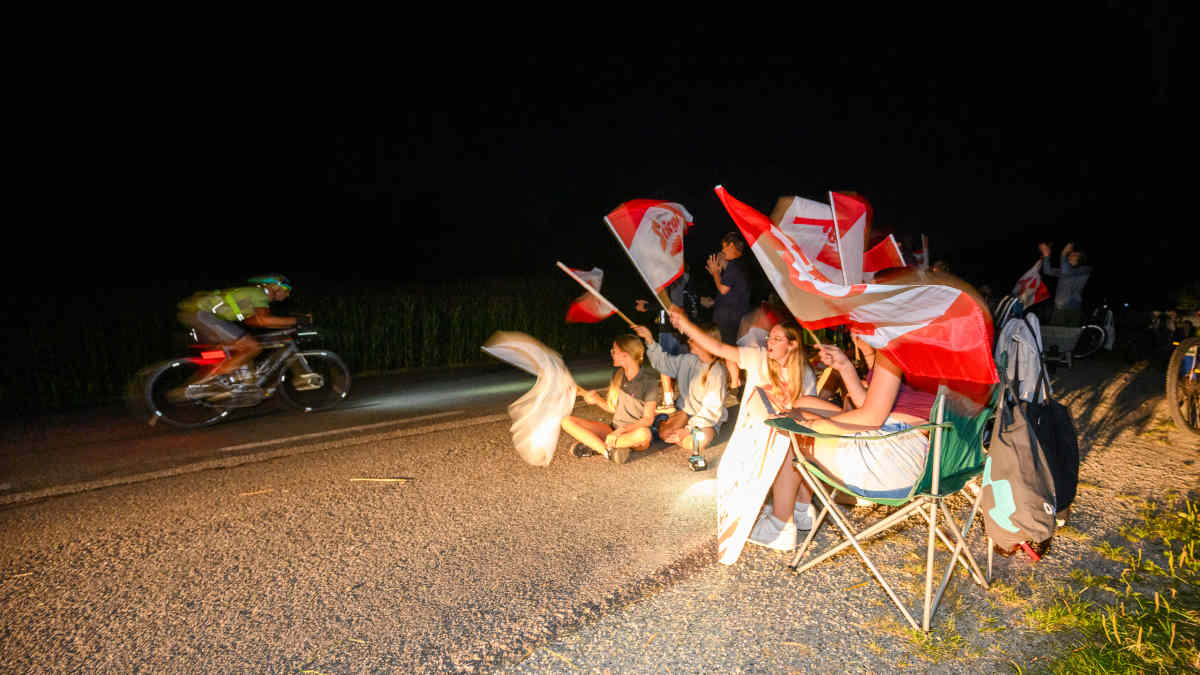
Partners supported the ultra-endurance sport either through active participation or extensive assistance. They formed a team with the athletes and took on logistical, practical and emotional tasks as helpers, coaches, cheerleaders and carers. Five participants shared the ultra passion of their partners - four in Ironman triathlon, one in ultra trail running. All described how sport strengthened their relationship through shared discipline, with affection often evident in moments of crisis.
"I think it's easier to be disciplined together than alone when the alarm goes off at 5.00 am. Together we stick to the schedule and our plan," reported participant P8. However, joint training rarely took place, as different performance levels prevented this. "We hardly ever train together, like cycling or running side by side. It doesn't work because we have very different speeds," explained P13.
Partners described how they managed the demanding training routines alongside full-time jobs. Many outsourced work but continued to bear the brunt of domestic duties. During a competition, physical support became essential, especially during extreme races. "We followed him the whole time, met him at aid stations, gave him his food. Waited, cycled to the next one, waited again, I massaged his legs and so on. Well, it's at least as exhausting as running," said P6, describing her experience of the 246-kilometre Spartathlon.
Emotional support proved to be crucial. The intense highs and lows of ultra sport demanded a high level of empathy from partners who had to adapt to fluctuating emotional states. "Sometimes you just have to be there and keep your mouth shut. Not say a word... Just be there and support, for whatever," is how P10 described their role during competitions.
Ultra-endurance sport as an all-pervasive structure
The partners' ultra-endurance sport represented an all-encompassing lifestyle for all interviewees, shaping their daily routine, eating habits, social life, car model, holidays and even house design. Leisure time largely revolved around physical activity. The ultra lifestyle enforced structured, performance-orientated routines: training, stretching, protein shakes, early dinners and sleep schedules. Some partners joined these routines, others adjusted their schedules and pursued their own interests while the athlete was away.
Holidays are typically used as training camps or competition trips - what some have called "Ironman tourism". For many couples, this form of sports-orientated travel has become routine.
Ambivalence between benefits and costs
Almost every benefit of the ultra-sport lifestyle came with a corresponding cost, often subtly revealed in the language of partners. The researchers identified seven subthemes of ambivalence in ultra-endurance sports. Partners valued the ultra lifestyle for its health benefits: regular daily exercise, healthier eating habits, improved sleep hygiene and an overall sense of vitality. However, these benefits were tempered by ongoing concerns about the inherent risks of ultra-sports, particularly cycling. Many described persistent fear of serious or potentially fatal accidents or overuse injuries such as tendonitis, joint tears and stress fractures. "Well, I'm worried. Because I know how he rides. When he gets on the bike, he goes crazy fast. He pushes too hard - and he's had two bad crashes in one year," said P12.
Partners accepted ultra sport as a defining passion. However, many also recognised the limits - when it became over-dominant and an addiction. The high costs and the fact that there is no time for activities outside of the sport can cause tension. "All our holiday time is taken up by triathlons. I love travelling and I don't always want to have to travel because of or for a race," said P7.
Traditional distribution of roles despite the claim to equality
Despite describing their relationships as modern and equal (including two same-sex couples), nine female participants recognised a tendency towards traditional roles. "I act like a nutritionist, I prepare food, always keeping in mind what he needs. He doesn't do much around the house, I take care of that. And I also wash his clothes, so we're pretty traditional," described P3.
Traditional gender roles are particularly prevalent in families with young children. One participant noted that her husband's deepening ultra commitment coincided with the birth of their first child, while she scaled back her sporting commitment for childcare. "When we first met, I was very sporty... And then everything changed when children came along. Then he went full throttle and I stayed on the couch," P6 recalled.
The share-support-or-separate dilemma
Ultra sport was seen as beneficial for bonding. At the same time, many recognised that refusing support was rarely an option. "You have to support it. If you don't, you don't stay together. He would break up with me if I said you have to stop.... I also wouldn't want to be with someone who would try to take away my passion. And that's his passion," explained P12.
Ultimately, maintaining well-being and relationship quality depended on balancing passion and moderation: Initial benefits of harmonious integration could tip over into obsession when training demands escalated. "So, within certain limits, it's okay. There are more benefits, more positives than negatives. And then over a certain kind of threshold it tips over. Then it doesn't become the best option health-wise either," summarised P9.
Bill and Philippe conclude:
Partners face a 'share, support or separate' dilemma: withdrawing support can fuel relationship tensions or lead to separation or divorce, while continued support often requires a modification of the athlete's ultra-commitment.
The study has several limitations. The small sample of 13 interviews limits generalisability. The absence of divorced and low-income partners further limits the diversity of perspectives. As a qualitative study, the findings only reflect a partial reality and cannot suggest causality.


Kristian Bauer
Editor
