


Unreliable and comparatively weak: The Formula Cura 4 has room for improvement
Max Fuchs
· 27.03.2026


Conclusion on the Formula Cura 4
Even though the Cura 4 is now a little long in the tooth, it decelerates quite well. Its strength lies in its good-natured modulation, low weight and low price point. If you want to unleash the full power reserves, you have to pull the lever disproportionately hard. - Dimitri Lehner, BIKE Editor
Our last brake comparison was five years ago. Since then, little has changed with Formulas' four-piston flagship. It's a shame, because while the competition has refined its candidates or introduced completely new models in recent years, the Cura has fallen somewhat behind the former price tip in the current test.
Technical data: Formula Cura 4
| Price | 211 Euro (without disc and accessories) |
| Weight per piece | 248 g (incl. 800 mm cable + pads) |
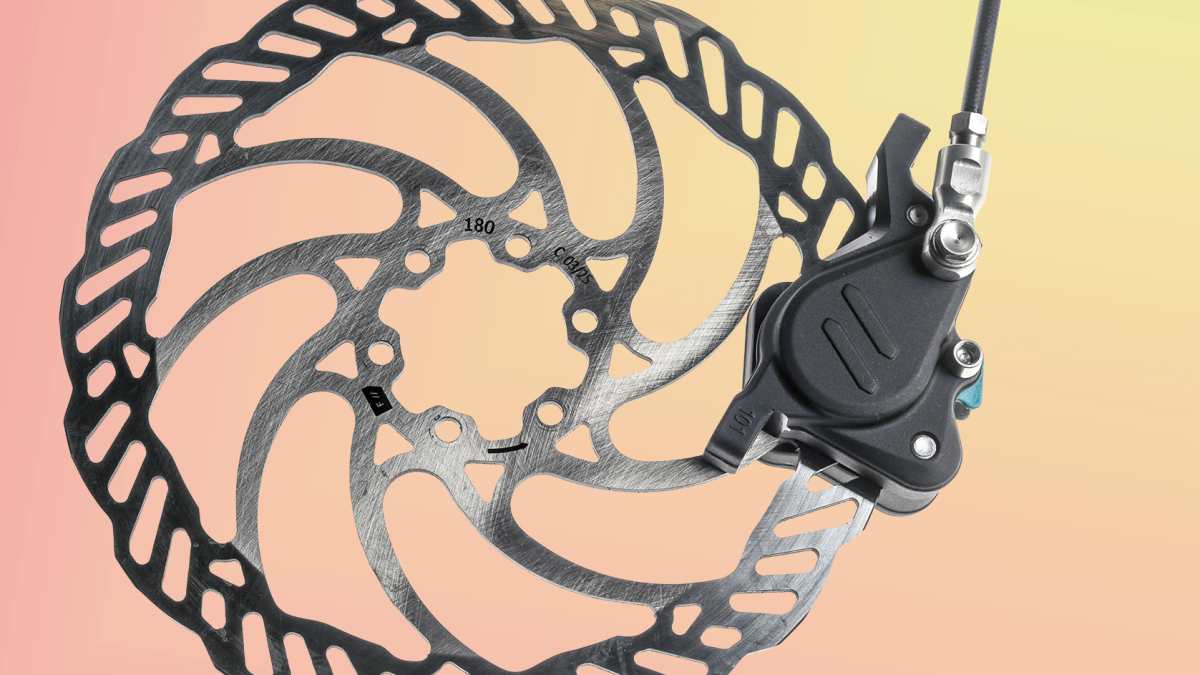
| Slices / thickness | 180 mm / 2.20 mm |
| Brake pads | Organic |
| Braking medium | Mineral oil |
| Pressure point adjustment | No |
| Lever width adjustment | Yes, tool required |
| Special features | Retrofit lever with additional pressure point adjustment available |
The Formula Cura 4 is lightweight and affordable
But one thing at a time: In terms of weight, the Cura 4 can secure a small points advantage. At 248 grams including the 800 millimetre long cable and a pair of pads, it comes in second place. Only the filigree Trickstuff with its 3D-printed titanium lever performs better. The price also sounds good: 211 euros - no other competitor offers more favourable four-piston power.
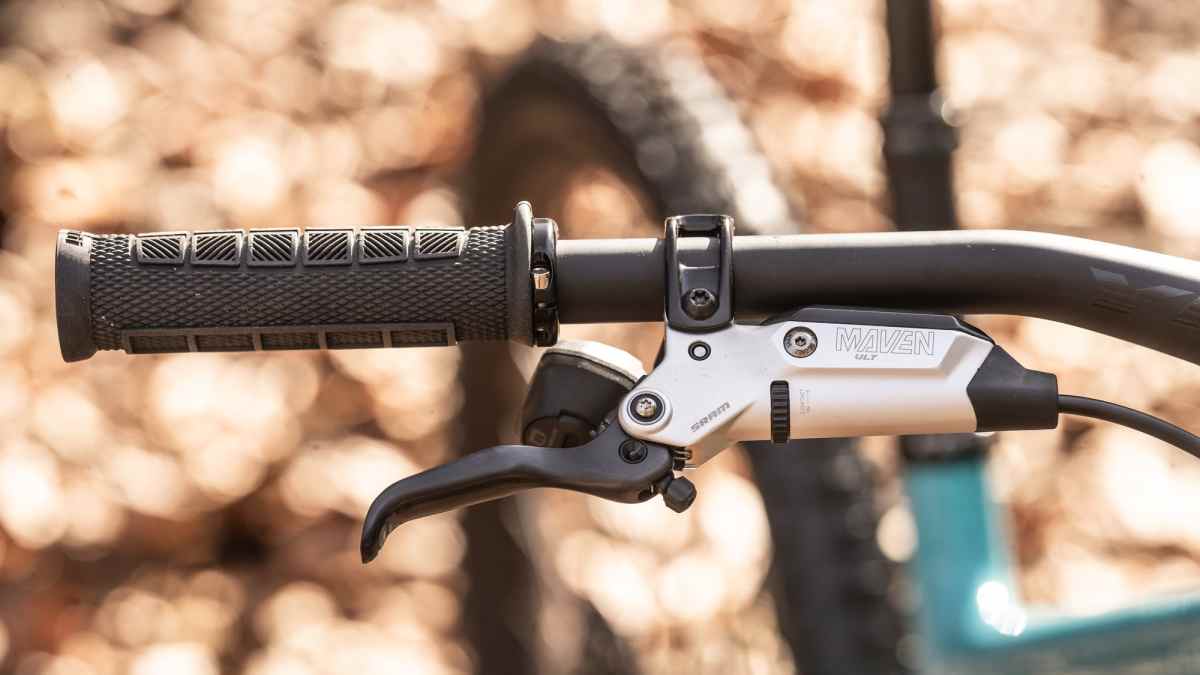
Good for heat management under continuous load and for durability: the 2.2 millimetre thick brake disc. The strongly rounded lever sits comfortably on the finger, the surface structure is reminiscent of fine-grained sandpaper and offers extra grip. The lever width adjustment is criticised: the knurled screw in the lever looks like it could be adjusted by hand, but it is so stiff that all testers had to use a mini-tool during setup. In addition, the lever width adjustment is too tight for large hands. On tour, the Cura 4 allows access to the pads from the outside - a small bonus for the usability account.
Too much series dispersion
In the practical test, the front brake developed an unusually hard and immediate pressure point - as if the pistons in the brake calliper did not fully return and got stuck just before the disc. Without the necessary free travel, it is difficult to modulate the initial bite despite the manageable braking force. Two of our endurance test bikes with the Cura 4 exhibited the same phenomenon. The rear test brake, on the other hand, works perfectly: enough free travel, pleasant pressure point - no reason to criticise. The fluctuating performance indicates excessive manufacturing tolerances. If you don't just want to fine-tune the lever width of the Cura, you can buy a retrofit lever with tool-free pressure point adjustment. Cost: 80 euros.
No chance with the Power
In partial load operation on undulating trails and short descents, the good-natured response behaviour of the Cura dominates. The braking power is sufficient - but full braking requires a fair amount of manual force. On long, steep descents, the candidate is the first to reach its limits: If your hands get tired, the Formula offers hardly any reserves and decelerates the worst compared to the competition. This is also confirmed by the laboratory data. In the wet braking test, the candidate comes second to last.
The BIKE rating
| Price (without disc and accessories) | 211€ |
| Braking power (50%) | 3,55 |
| Wet braking (10%) | 3,5 |
| Dry braking (40%) | 3 |
| Practice (50%) | 4 |
| Modulation (30%) | 3 |
| Usability / Handling (10%) | 4 |
| Weight (10%) | 1,5 |
| BIKE NOTE (100%) | 3,2 |
How BIKE tests disc brakes
Our impressions of the character, modulation and handling come from practical tests. We determined the maximum braking power and thermal stability in accordance with the DIN standard on the roller test bench of the brake manufacturer Magura.
- Braking force test in the laboratory: To ensure that the brakes can deliver their maximum performance on the test bench, the test standard prescribes a defined braking procedure. All models must maintain a constant braking force of 200 newtons over 20 braking intervals in order to come up to temperature and rule out pad fading during the brake force test. Only then does the actual test of strength begin. It consists of three brake applications per force applied to the lever. It starts with 40 newtons of manual force. The test stand increases the force on the lever in 20 Newton increments until the brake reaches its maximum lever travel. Each brake undergoes this procedure twice: once in the dry and once in the wet. During wet running, the disc is continuously wetted throughout the entire measurement. For an optimum comparison, all models run with 180 mm discs. The pad compounds always correspond to the standard equipment. The manufacturers were allowed to select the discs themselves - if several options are available in their own range - in favour of braking performance. For uniform comparative values, we carry out the braking force test and the heat resistance test with a fresh pair of pads and a new brake disc. For the evaluation of braking performance in the laboratory, we only use the results at 80 N manual force. In this range, all models still deliver practice-relevant values below the 600 N threshold, especially during dry braking. Above this level, there is a risk of rollover under ideal grip conditions.
- Heat resistance: As a second hurdle in the laboratory, all brakes have to pass a standardised heat resistance test twice. After all, the candidates should decelerate reliably even under high thermal loads. The programme includes three endurance braking sessions of five minutes each. Shortly after each interval, an abrupt control brake application follows, which shows whether the brakes still decelerate perfectly despite the heat. Finally, the test bench calls up the required minimum braking force three times. All brakes passed this test.
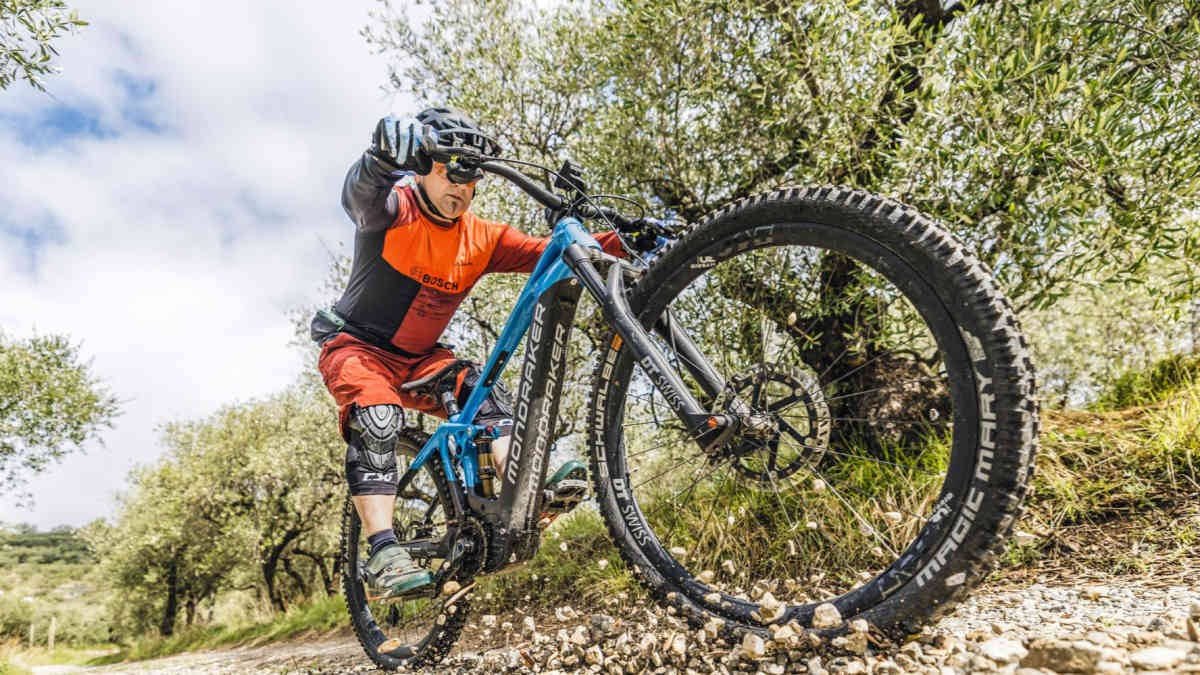
- Practical test: No test bench can measure how a brake develops its power off-road, how it reacts to low manual forces, how finely it can be metered and how it feels in the hand. This is where experience counts. And our testers have plenty of it: over 100 complete bikes go through our test procedure every year. Our editors therefore know most of the brakes inside out. In addition, two testers rode all the brakes in this test in direct comparison on standardised bikes with identical setups.

Max Fuchs
Editor
